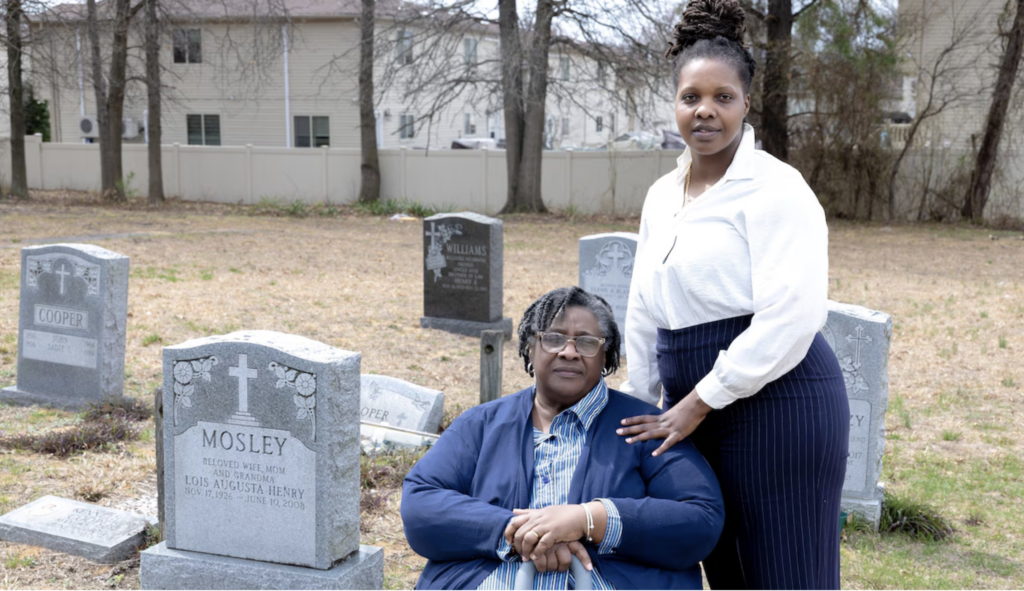
STATEN ISLAND, N.Y. — Glenda Laboard, 72, recalls the day her parents told her she was leaving her close-knit Rossville community, where her family had lived for decades, and moving to the Mariners Harbor Houses on the other side of the Island.
At just 6 years old, she knew she was leaving a special place and feared what life would be like in a new community.
“I expected the worst. I was afraid and angry, and I didn’t want to leave the little village that was my home,” Laboard said.
That village was Sandy Ground — the oldest continuously inhabited free Black community in the United States by descendants of its original settlers.
“Growing up in Sandy Ground was like growing up in the South. As kids, we ran around with no shoes on. … The only thing that sent us in the house was the giant mosquitoes. They were giant because it was all swamp. I remember we all played all day long,” she said.
Laboard’s mother, Lois A.H. Mosley, wrote a book about her upbringing in Sandy Ground titled Sandy Ground Memories. Her father, Glenby Alvin Mosley — later known in professional baseball as Glen Richardson — played in the Negro Leagues, which were formed for Black players during segregation. He played for the Black Yankees in the mid- to late-1940s, according to public records.
Among Laboard’s fondest memories of Sandy Ground are church and family. Even after she moved away, she returned each Sunday to worship at Rossville AME Zion Church.
“We put on our Sunday best and went to church. It was an all-day experience — from morning until evening. Church was the center of our village. Everything I knew began and ended there,” she said. “Sandy Ground is my foundation, and I thank God for my ancestors keeping it alive so the world could know how important it is to maintain its history.”
About Author